



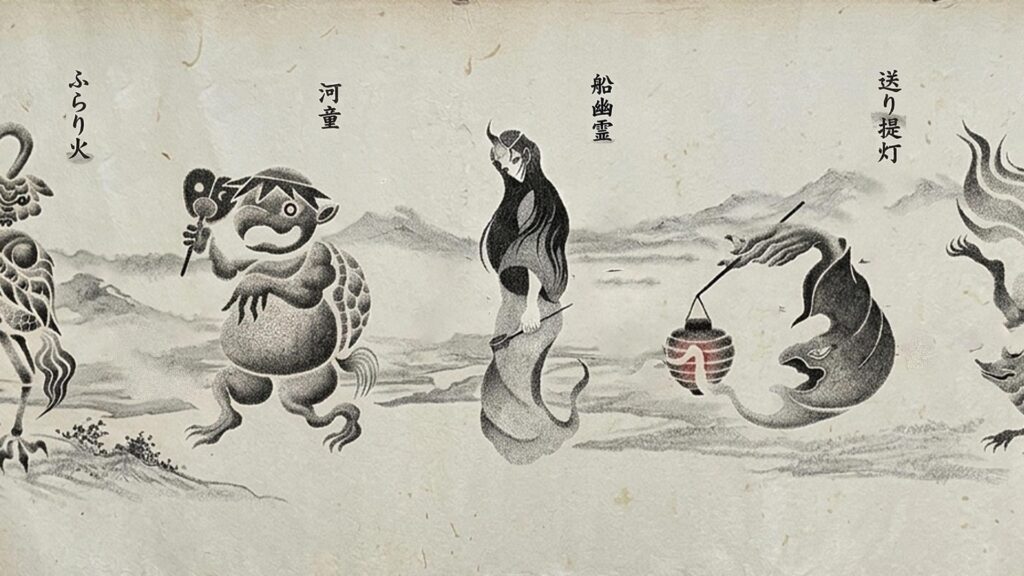
Introducing Tokyo's Summer Yokai
Summer is arriving in Tokyo. In this city, once known as “Edo,” people possessed a unique wisdom for enduring the intense heat long before the era of air conditioning. That wisdom was the culture of Kaidan (ghost stories) and Yokai (monsters/apparitions) told in the dead of night.
To the people of Edo, ghosts and yokai were not merely objects of fear. Instead, they weaponized their own physical reactions—that sudden “shiver” running down the spine upon hearing a scary story—as a clever tool to cool down during the sweltering summer. Gathering by drafty wooden lattices to indulge in Hyakumonogatari (The Game of One Hundred Ghost Stories), extinguishing candles one by one, or listening to ghostly tales at the yose (traditional comic theaters). Intentionally imagining eerie presences to conjure a chilling breeze was both a major form of entertainment and a daily custom of the time.
This tradition offers modern travelers a fresh way to experience Tokyo. Rather than simply hitting the usual tourist spots, we can touch the memories of the city by tracing the very stories our ancestors created to beat the heat. Even today, if you wander through areas holding historic place-names, you can still feel the quiet breath of these yokai—at once endearing and frightening—born from the summer heat. Here is a guide to the summer yokai ready to refresh the minds of anyone visiting Tokyo in the coming season.
Asakusa & Sumida River】The Yokai Lurking in the Waters
Asakusa is a destination that nearly every traveler visits at least once during a summer trip to Tokyo. Flowing gently alongside it, the Sumida River was once the most bustling hub for townspeople seeking a reprieve from the heat.
A gentle breeze brushing across the water at twilight, and fireworks illuminating the night sky—yet, once the sun dipped below the horizon and a thick mist rolled over the river, the waterfront instantly transformed into an “otherworld,” waking the specters that dwelled within.
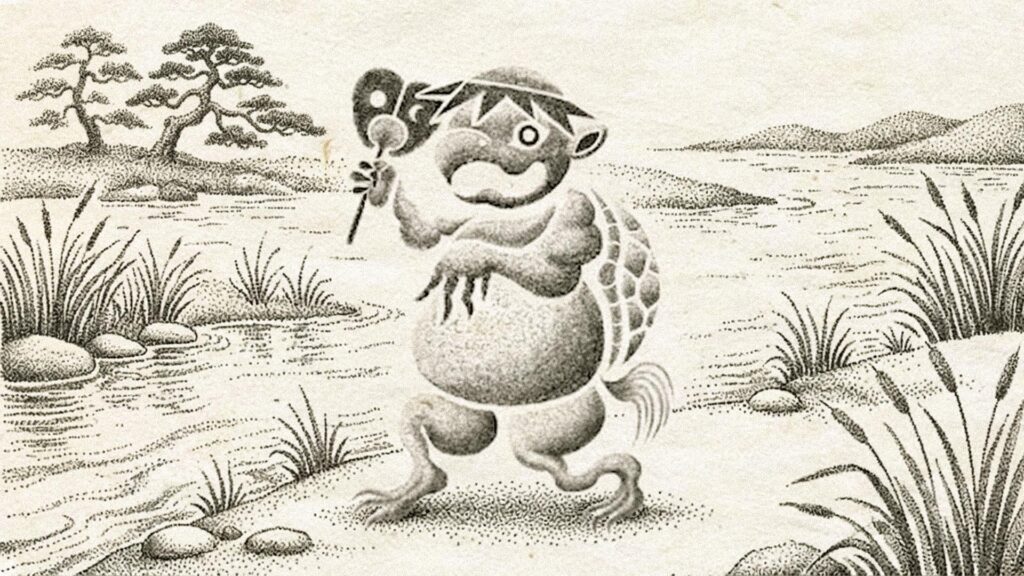
The Kappa of Asakusa
The Kappa—whose legacy still warmly lingers today in local place-names like the “Kappabashi Kitchen Town”—is Japan’s most widely known water spirit. While typically feared as terrifying monsters that drag humans into the water, the kappa woven into Asakusa’s history are depicted as companions to mankind. This stems from a legend from the Edo period: when flood control projects in the area were failing, the kappa of the Sumida River would appear night after night to help with the construction, ultimately saving the town from water disasters.
The supernatural and the human, two entities that should otherwise be incompatible, joined hands to build a city. In the image of the kappa—living while maintaining a balance between their own instincts and nature—the Japanese mindset of valuing harmony is beautifully reflected.
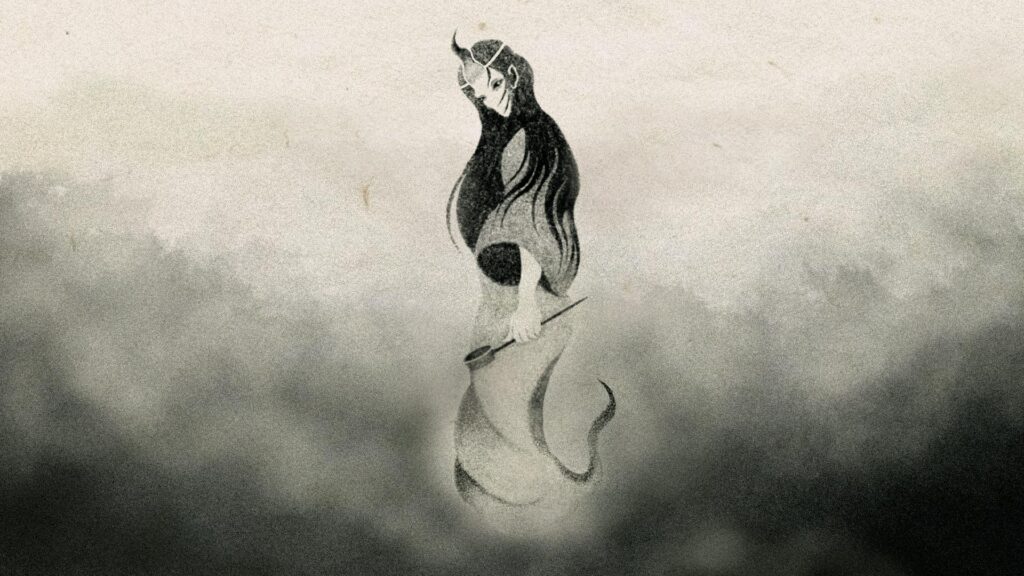
Funayurei of the Okawa River
On a summer night, while enjoying the cool breeze aboard a yakatabune (traditional houseboat) on the Sumida River (historically called Okawa), the Funayurei would suddenly emerge from beyond the river mist. “Give me a ladle…” they whisper. If you hand one over as told, they will use it to pour water into your boat until it sinks—a specter symbolizing the raw dread of the water’s edge.
While born from the terrifying reality of water disasters, the people of the time did not merely cower in fear. Instead, they countered the threat with brilliant resourcefulness: keeping a bottomless ladle on board at all times. They would sail away, leaving the bewildered ghosts completely unable to scoop any water. It is a summer apparition that beautifully showcases the clever wisdom of our ancestors, who managed to inflect even the most terrifying moments with a streak of humor.
【Honjo】The Night Roads of the Shitamachi: Dread of Nature and the Solace of Light
After catching the night breeze by the Sumida River in Asakusa, stepping further east brings you to the Honjo area of Sumida Ward. While it is now a sophisticated cityscape dominated by the soaring Tokyo Skytree, it was once a shitamachi (traditional downtown) where quiet samurai residences and bustling tenement houses coexisted. Deprived of any streetlights, the night in Honjo was wrapped in a profound darkness—a shroud that concealed the yokai of the “Seven Wonders of Honjo,” waiting to bewitch passing travelers.
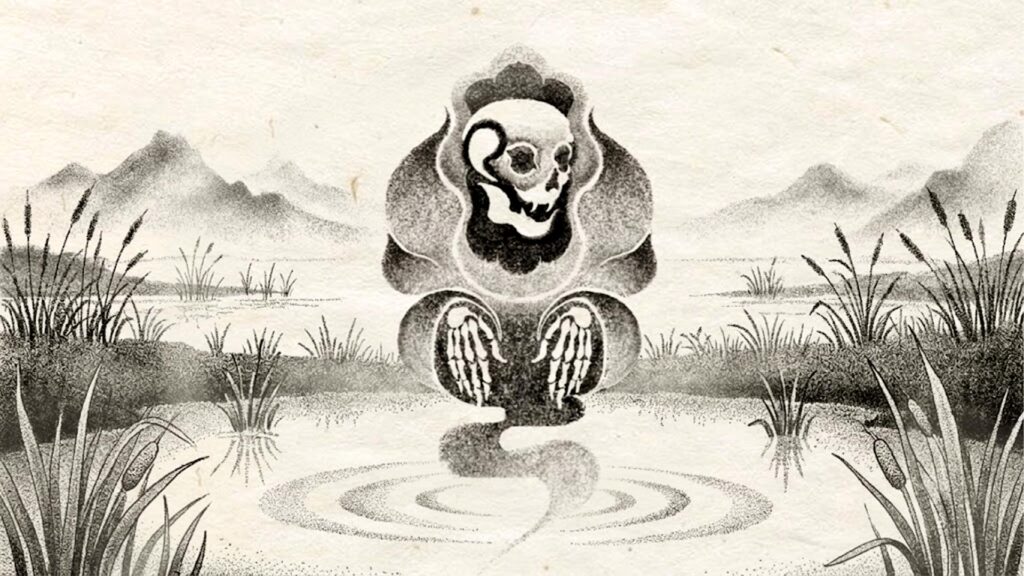
Oiteke-bori (The "Leave-It-Behind" Canal)
At twilight on a summer evening, after catching plenty of fish in the canals of Honjo, you head home with a warm sense of satisfaction. Suddenly, a low, earth-crawling voice echoes from the dead-silent water: “Leave it behind…” (Oiteke…)
Terrified, you flee back to your house. But when you timidly open your tackle box, you find that every single fish you caught has vanished. This is the mysterious phenomenon of the Oiteke-bori.
While this legend is the origin of the everyday Japanese phrase “oitekebori” (meaning “to be left behind”), this entity never actually harms anyone. Instead, it serves as a gentle warning to humans who try to monopolize the blessings of nature—a reminder of the virtue of “taking only what you need, and returning the rest to nature.”
It is a yokai that beautifully captures a sense of modesty toward the natural world, transforming what could be a moment of pure terror into a story that ends with a knowing smile.
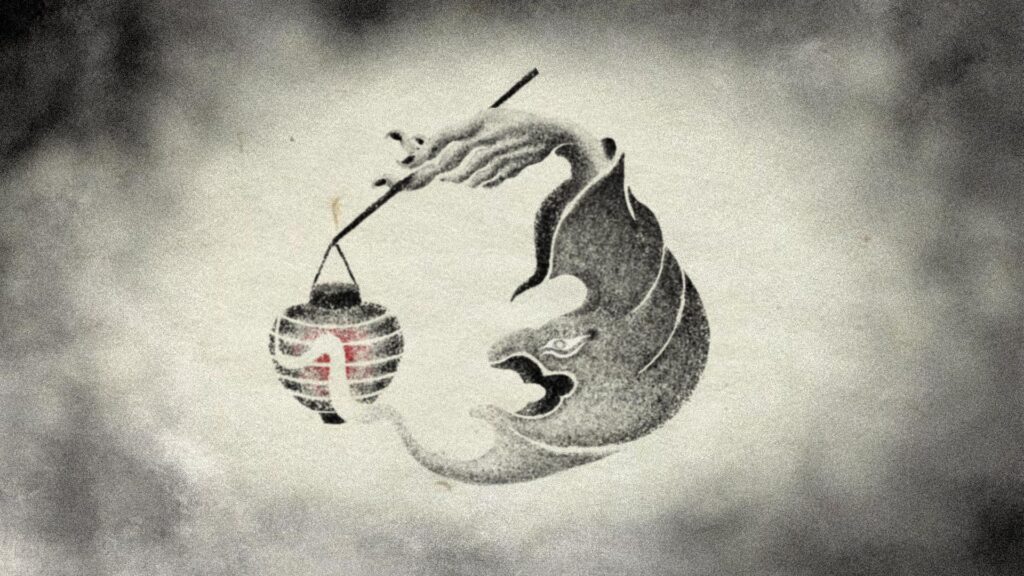
Okuri-Chochin (The Guiding Lantern)
When walking and shivering through the pitch-black darkness of a night devoid of light, a warm glow might suddenly pop into existence out of nowhere right before your eyes. This is the Okuri-Chochin, a gentle yokai that floats softly ahead to guide you along your night path.
If you follow the light of this lantern, you will be guided safely to your destination without getting lost in the dark. However, the exact moment you feel a sense of relief, the lantern vanishes into thin air like smoke. Rather than simply fueling fear, this specter beautifully captures the inherent kindness of the world as believed by the people of that era—a reassurance that beyond the darkness, a warm salvation always awaits.
【Ueno & Shinobazu Pond】An Eerie Flame Flickering in the Summer Darkness
Passing through the deep darkness of Honjo, we arrive at the hills of Ueno. Nestled at their base is Shinobazu Pond. In the summer, beautiful lotus blossoms burst into bloom, completely blanketing the water’s surface—a special sanctuary that has healed the hearts of people since ancient times.
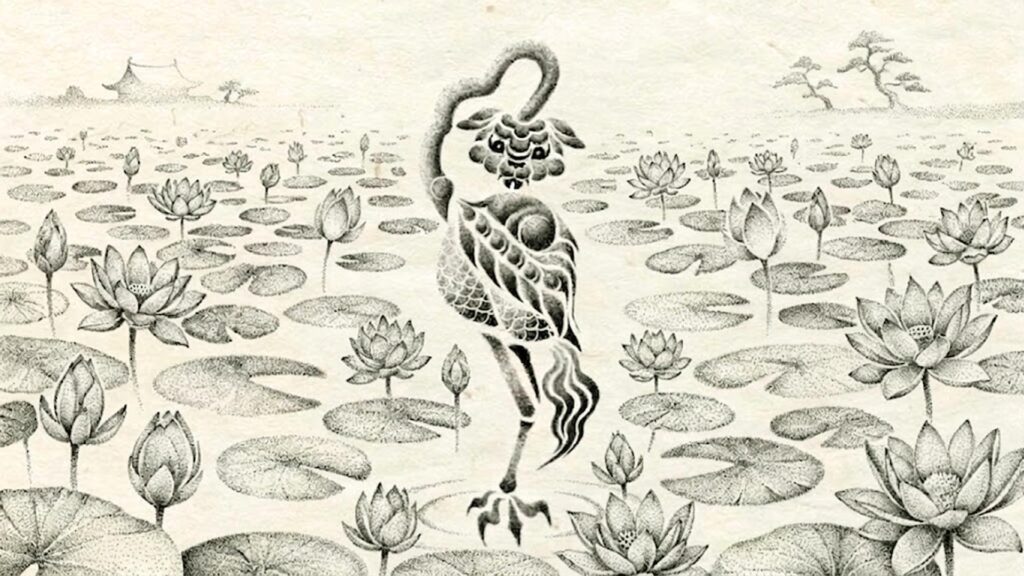
The Furaribi of Shinobazu Pond
Shaped like a melancholy bird wrapped in crackling, blazing fireballs, this is a psychedelic yokai that drifts aimlessly across Shinobazu Pond in the summer. While its origins are said to lie in the natural luminescence of wetlands, the artists of the era transformed it into a solitary, breathtakingly beautiful creature.
Bound by nothing as it surrenders itself to the night breeze, its figure serves as the ultimate symbol of freedom. Furthermore, its all-consuming fire acts as a metaphor for “rebirth”—resetting bad luck to begin anew. Floating lightly through the night wherever its soul desires, its presence is bound to lift the spirits of anyone taking a stroll through Ueno on a summer night.
Short Supernatural Tales of a Summer Night
While we have explored each of these yokai individually, the people of Edo whispered that these creatures were deeply interconnected behind the scenes of the city. Here are a few unexpected stories of these specters, hidden within the summer darkness.
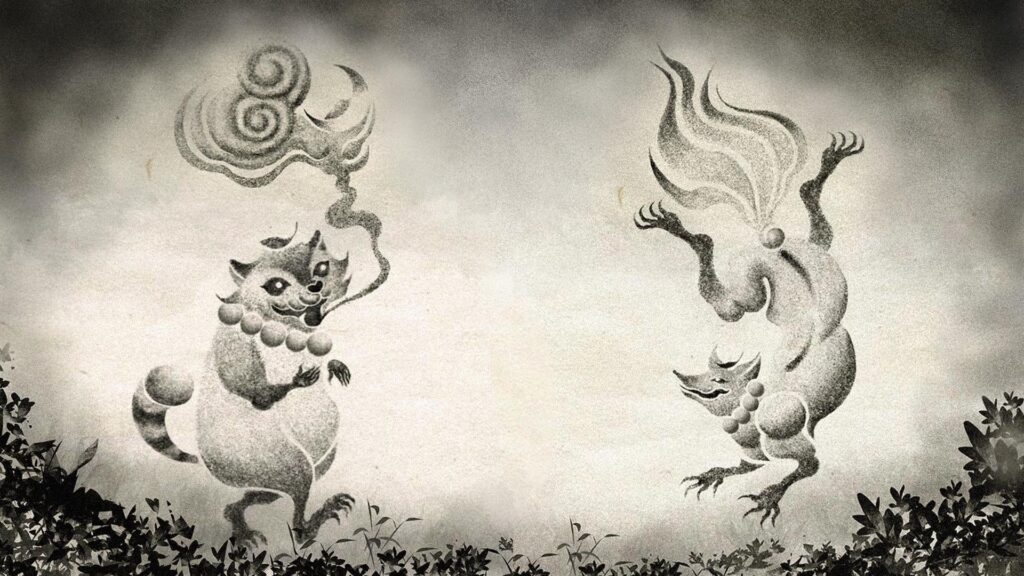
The Great Yokai Battle of Tokyo
Ueno Hill in the summer—this is the setting of a famous legendary battle between tanuki (raccoon dogs) and kitsune (foxes).
Long ago, the grand commander of Edo’s tanuki resided on Ueno Hill. He shared a fierce rivalry with a legion of foxes based in the neighboring town of Oji. One sultry summer night, to settle once and for all whose shapeshifting skills were superior, they launched a spectacular illusion battle across the night sky. The foxes besieged the hill with thousands of fireballs, while the tanuki retaliated by conjuring multiple “fake moons” in the night sky, throwing the entire town into utter chaos.
To humans, it felt like an apocalyptic terror, but in reality, it was just a stubborn clash of pride between overly competitive yokai. Although the battle ended in victory for the tanuki, it is rumored that the residual energy scattered during the clash continued to drift over Shinobazu Pond ever since—becoming the very true identity of the Furaribi we introduced earlier.
Embracing Tokyo’s Darkness
Tokyo’s nights are perpetually flooded with light and information. Glancing at the glittering, dazzling cityscape or the smartphone in your hand will instantly yield endless entertainment. Yet, on a summer night, there is a distinct charm in intentionally closing your screen and turning your gaze toward the darkness of the city.
As you stare blankly at the surface of the Sumida River or stroll through the streets at night, you begin to feel as if the “shadows” the people of Edo once witnessed are still lurking just around the corner. It allows us to adopt the carefree perspective of our ancestors, who imaginatively wove humor into the chaotic antics of the yokai behind these supernatural phenomena. When a sudden, cool draft from between the skyscrapers brushes against the back of your neck, you can idly think to yourself, “Ah, maybe a yokai just passed by.” By expanding our perception of the world just a little, the familiar city transforms into a playful, entirely different space.
Illustration & Character Design by Nissy
AI and stock assets were used for the backgrounds.
※掲載の画像および情報は、各公式ウェブサイトや関連メディアの記事などを参考に整理・編集のうえ掲載しており、権利はそれぞれの所有者に帰属し、各公式ウェブサイトおよび関連メディアを出典としています。 ※The images and information published on this site have been organized and edited based on official websites and related media articles. All rights belong to their respective owners, and the sources are credited to official websites and related media.
THE GOOD CAT SCRATCH
Lifestyle, Art & Tattoo
安心してお越しいただき、心地よい時間を過ごしていただける空間づくりを目指しております。
全てのお客様に特別な時間をお楽しみいただくために、謙虚でありながらも、感性に響く美しさをお届けできればと思っております。
We strive to create a space where our client can feel at ease and enjoy a truly comfortable experience.
With humility and care, our hope is to offer a sense of beauty that resonates with the senses, so that each and every client may enjoy a truly special moment.

住所:〒153-0051 東京都目黒区上目黒2-47-5 Xspace中目黒 1階
アクセス:東京メトロ日比谷線・東急東横線 中目黒駅南改札 西出口より徒歩約6分
Address : 2-47-5 Kamimeguro, Meguro-ku, Tokyo 153-0051, Japan
Access : Approximately a 6-minute walk from the South Gate / West Exit of Nakameguro Station (Tokyo Metro Hibiya Line / Tokyu Toyoko Line)
ご意見、ご質問などございましたら、お気軽にインスタグラムページのDMにて、ご連絡お待ちしております。
If you have any questions or comments, feel free to send us a direct message on our Instagram page. We look forward to hearing from you.
#TokyoTattooStudio #FineLineTattoo #東京タトゥー
