



日本と世界のタトゥーの歴史紹介
The History of Tattoos in Japan and the World
日本のタトゥーは「恐怖の対象」、「隠すべきタブー」の時代を終え、自分らしさを表現するライフスタイルへと変わりつつあります。
今では、20代30代の女性を中心に親しまれ、タトゥーを受け入れる銭湯や温泉施設も増えるなど、生活の景色に溶け込み始めています。
Tattoos in Japan have moved past the era of being “objects of fear” and “taboos to be hidden,” and are changing into a lifestyle for expressing one’s true self.
Nowadays, they are popular mainly among women in their 20s and 30s, and as the number of public baths and hot spring facilities that accept tattoos increases, they are beginning to blend into the scenery of everyday life.
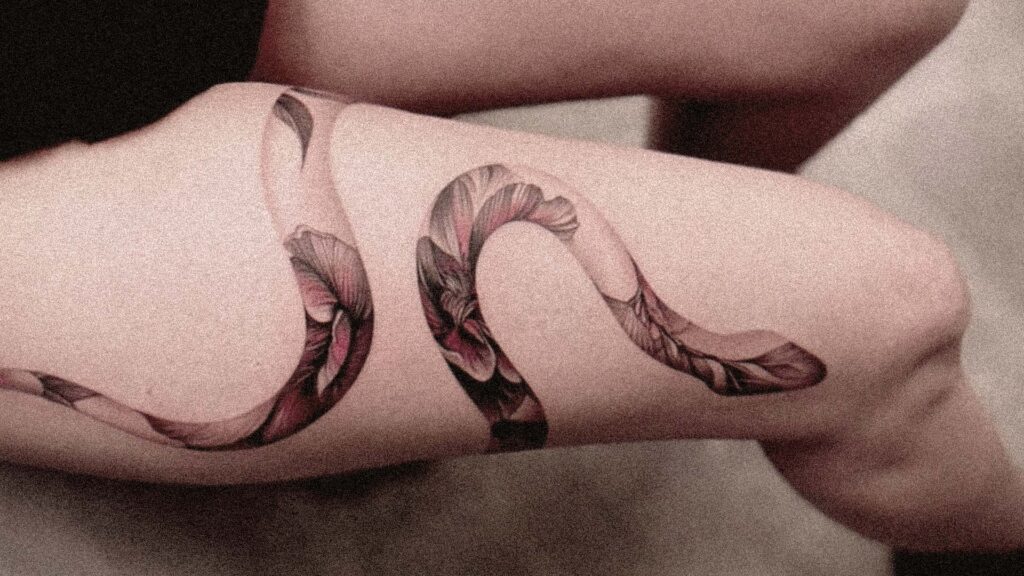
私たちのスタジオ「THE GOOD CAT SCRATCH」では、美術・芸術分野で経験を積んだアーティストが在籍しております。
ファインラインタトゥーをはじめ、それぞれが培ってきた独自のスタイルを大切にしながら、お一人おひとりのお客様のご要望と丁寧に融合させ、タトゥーとしてご提供しております。また、安全と衛生管理にも誠実に向き合い、身体や環境に優しい「ヴィーガンインク」を使用しております。
しかし、こういった最新のタトゥーのスタイルの根底には、数千年前から世界中で絶えることなく受け継がれてきた「人類の祈りと誇り」が息づいています。現代のファッションや流行という言葉だけでは語り尽くせない、人が肌に墨を刻み続ける理由。今回は、日本と世界のタトゥーの歴史をご紹介します。
At our studio, “THE GOOD CAT SCRATCH,” artists who have gained experience in the fields of the arts are in residence.
Starting with fine-line tattoos, we value the unique styles that each artist has cultivated, while carefully merging them with the requests of each individual customer to provide them as tattoos. Furthermore, we sincerely address safety and hygiene management, and we use “vegan ink” that is friendly to both the body and the environment.
However, at the foundation of these latest tattoo styles, the “prayers and pride of humanity,” which have been handed down continuously throughout the world for thousands of years, are alive. The reason why people continue to engrave ink into their skin cannot be fully explained by modern words such as fashion or trends alone. This time, we will introduce the history of tattoos in Japan and the world.

日本のタトゥーの歴史
The History of Tattoos in Japan
まずは島国という場所で、独自の発展を遂げた日本のタトゥーの歴史をご紹介します。その起源は、約1万年以上前まで遡ります。
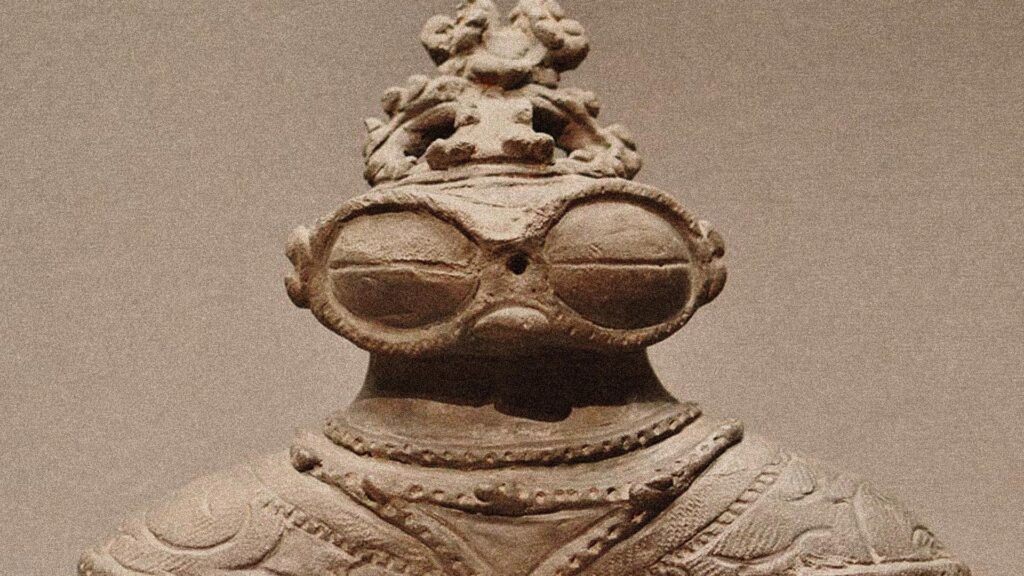
縄文時代から弥生時代、私たちが知る土偶の顔や身体に刻まれた力強い文様は、当時の人々が実際に施していた刺青と考えられています。 それは自然界と繋がり、命を守るための「魔除け」や自身の階級を示す「身分証明」でした。 その文化は日本の北と南の地で、一族の誇りや信仰を宿した「民族刺青」として、力強く息づき続けます。
First, we will introduce the history of tattoos in Japan, which underwent a unique development in this location as an island nation. Their origins trace back to approximately over 10,000 years ago.
From the Jomon period to the Yayoi period, the powerful patterns carved into the faces and bodies of the clay figurines (dogu) we know are thought to be tattoos that the people of that time actually practiced. They were “talismans” to connect with the natural world and protect life, as well as “identification” to indicate one’s own rank. That culture continues to live on powerfully in the northern and southern lands of Japan as “ethnic tattoos” that house the pride and faith of a clan.
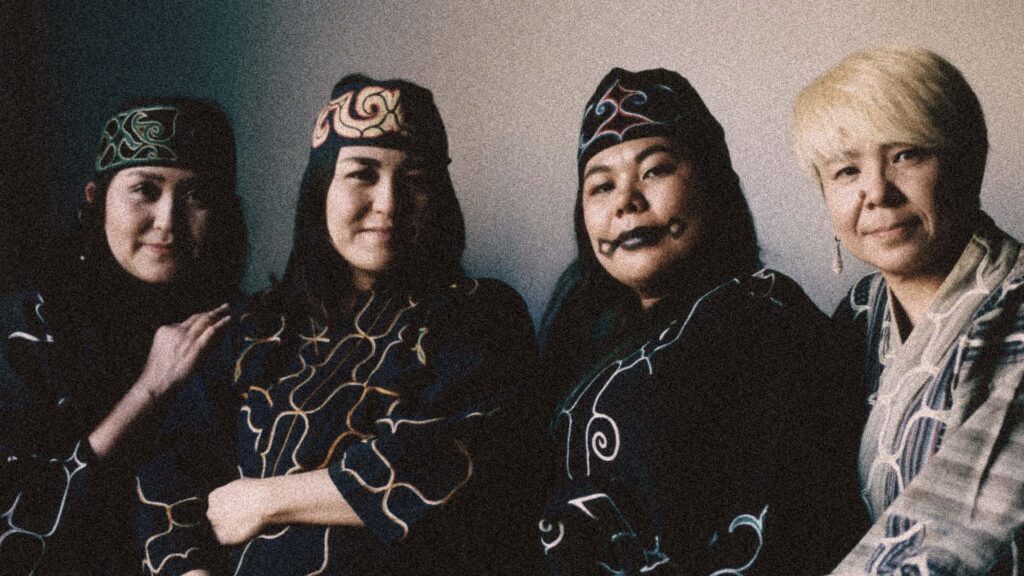
アイヌのシヌイェ
Ainu Sinuye
北海道のアイヌ女性たちは、口の周りや手に「シヌイェ」と呼ばれる刺青を施しました。これは成人の証であると同時に、魔物を除け、死後も先祖と再会するための神聖な印であり、厳しい自然の中で生き抜くための「魂の象徴」でした。
Ainu women in Hokkaido applied tattoos called “Sinuye” around their mouths and on their hands. This was a proof of adulthood, and at the same time, a sacred mark to ward off evil spirits and to reunite with ancestors after death; it was a “symbol of the soul” for surviving within the harshness of nature.
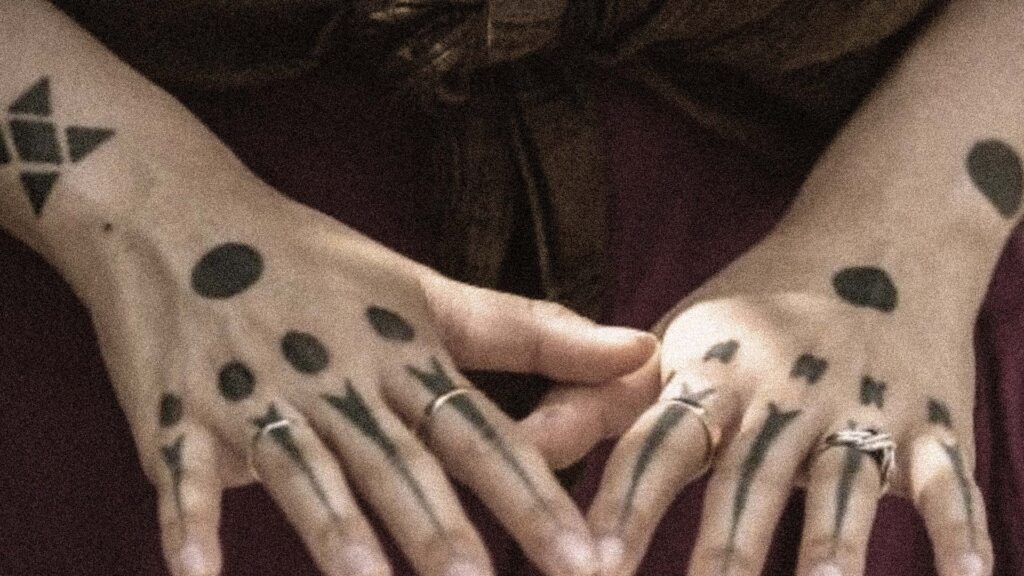
琉球のハジチ
Hajichi of Ryukyu
沖縄や奄美諸島では、女性たちが手の甲に「ハジチ(針突)」と呼ばれる文様を刻みました。それは家系の証や災厄を払う護符であり、何より「女性の尊厳と自由」を象徴する、人生の節目に欠かせない儀式だったのです。
In Okinawa and the Amami Islands, women engraved patterns called “Hajichi” on the backs of their hands. It was a proof of lineage and a talisman to ward off disaster, and above all, it was an indispensable ritual for life’s milestones, symbolizing “female dignity and freedom.”
長いタブーの時代へ
Into a Long Period of Taboo
北と南の地で豊かな精神性が守り抜かれる一方で、日本本土では、タトゥーへの価値観が大きく変わりました。
奈良時代、中国からの国家制度が導入されると、日本固有の価値観は一変します。儒教の「身体を傷つけることは親不孝である」という教えが浸透し、かつて自然界と繋がるための刺青は、「不浄なもの」として退けられるようになりました。 さらに刺青は「入墨刑」として犯罪者への刑罰へと使われるようになり、本州におけるタトゥーは、ここから数百年に及ぶ長いタブーの時代へと突入します。
While a rich spirituality was being preserved in the northern and southern lands, the values regarding tattoos changed significantly in mainland Japan.
In the Nara period, when the national system from China was introduced, Japan’s indigenous values changed completely. The Confucian teaching that “harming the body is a lack of filial piety” permeated, and tattoos, which were once for connecting with the natural world, came to be rejected as “impure things.” Furthermore, tattoos began to be used as “Irezumi-kei” (punishment by tattooing) for criminals, and tattoos in Honshu entered a long era of taboo spanning several hundred years from this point.
“粋”;伝統刺青、和彫りの誕生
“Iki”: The Birth of Traditional Tattooing and Wabori
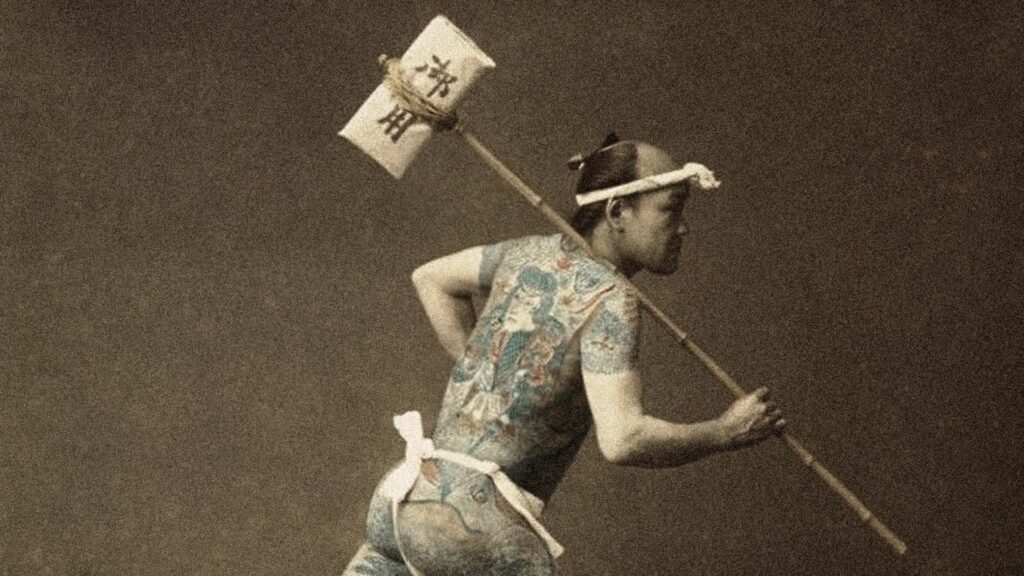
江戸時代に入っても260年間、日本でタトゥーは犯罪者への刑罰として刻まれていました。しかし長い沈黙の時代を経て、江戸の町人たちにより驚くべき進化を遂げます。刑罰という「負の烙印」を、自らの美学で「粋」な芸術へと塗り替えてしまったのです。 それまでの日本文化といえば、質素さや静寂を尊ぶ「侘び寂び」が語られがちですが、江戸の町人文化はその真逆ー強烈な色彩、躍動する筆致、そして圧倒的な存在感を放つ「豪華優雅」な美意識に溢れていました。 その中心にあったのが、当時の浮世絵師たちが手がけた「和彫り」です。 肌に刻まれたその煌びやかな文様は、罰としての入れ墨を隠し、身に纏う究極の大衆芸術となりました。
「粋」とは、野暮を嫌い、身の処し方にこだわりを持つこと。 厳しい階級社会の中で、町のヒーローであった火消しや職人たちは、「自分の誇りだけは誰にも奪わせない」という強い個性を刺青に託しました。 刑罰の跡さえも煌びやかなアートで覆い隠し、痛みを伴う刺青を「誇り」へと変えてしまう。その強気な反骨精神こそが、江戸っ子が最も尊んだ「粋」の境地だったのです。
Even after entering the Edo period, for 260 years, tattoos in Japan were engraved as a punishment for criminals. However, after a long era of silence, they underwent a remarkable evolution by the townspeople of Edo. They repainted the “negative stigma” of punishment into “Iki” art through their own aesthetics. While Japanese culture up to that point is often discussed in terms of “Wabi-sabi,” which prizes simplicity and silence, the Edo townspeople’s culture was the exact opposite—it overflowed with a “gorgeous and elegant” aesthetic that radiated intense colors, dynamic brushwork, and an overwhelming presence. At its center was “Wabori,” created by the ukiyo-e artists of the time. Those brilliant patterns engraved on the skin hid the tattoos meant as punishment and became the ultimate popular art to be worn on the body.
“Iki” means to dislike the unrefined and to have a particular commitment to how one carries oneself. Within a strict class society, the heroes of the town, such as firemen and artisans, entrusted their tattoos with a strong individuality, as if to say, “I will let no one take away my pride.” Covering even the marks of punishment with brilliant art and transforming the painful tattooing into “pride”—that strong spirit of rebellion was the state of “Iki” that the Edokko (people of Edo) prized most dearly.
刺青はなぜタブーになったのか
Why Tattoos Became Taboo
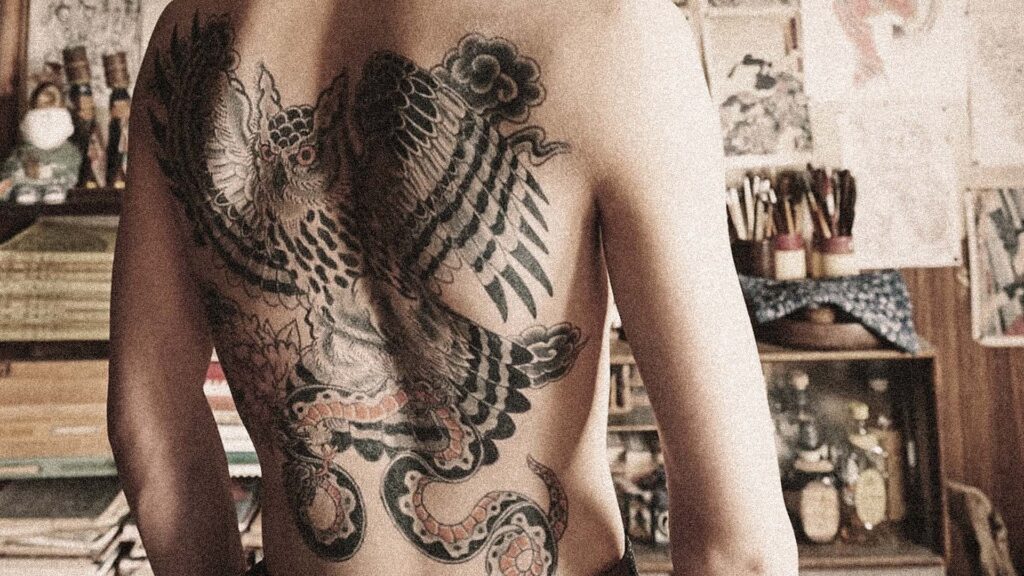
江戸時代に花開いた文化ですが、1872年(明治5年)、明治政府は「違式詿違条例」を公布。刺青を施すことが、西洋の発展国と比べ、近代国家にふさわしくない風習として制限されました。 それにより刺青は、映画『国宝』でも描かれるような自分が信じて、心のより処となる化身を痛みに耐え抜きながら身体に施す行為そのものが、精神的な強さ=覚悟を証明する「忍耐の儀式」へと昇華されていったのです。アウトローの世界で「潜伏する美学」として独自の進化を遂げました。 こうした歴史背景が、刺青とアウトローの世界を深く結びつけ、現代まで続く「タトゥーは怖い」というイメージの源流となりました。
時代の変化とともに、タトゥーを取り巻く環境も少しずつ見直されてきました。タトゥーという行為は長らく法的に明確に定められておらず、2020年9月には「医師免許を持たない彫り師による施術が医師法違反にあたるか」が裁判で争われました。最高裁判所は、施術の芸術性や歴史的背景を重視し、タトゥーが文化的価値を持つ表現であることを認めました。
こうした歴史の中で数多くの制約を乗り越えながら、刺青は単なる装飾を超え、個人の祈りやアイデンティティを刻む存在へと変化してきました。現在では、文化的背景を持つ表現として尊重されるべき、精神的な遺産のひとつとして捉えられるようになっています。
Although it was a culture that blossomed in the Edo period, in 1872 (Meiji 5), the Meiji government promulgated the “Ordinance on Punishments for Petty Offenses.” The practice of tattooing was restricted as a custom unsuitable for a modern nation compared to the developed countries of the West. Due to this, the act itself of enduring pain to apply an incarnation that one believes in and that serves as a spiritual refuge to one’s body—as depicted in the movie “Kokuhou”—was sublimated into a “ritual of endurance” that proves mental strength and resolve. It underwent a unique evolution as a “hidden aesthetic” in the outlaw world. This historical background deeply connected tattoos and the outlaw world, becoming the source of the “tattoos are scary” image that continues to the present day.
With the changes of the times, the environment surrounding tattoos has also been gradually re-evaluated. For a long time, the act of tattooing was not clearly defined legally, and in September 2020, a court case contested whether “procedures performed by tattoo artists without a medical license constitute a violation of the Medical Practitioners’ Act.” The Supreme Court emphasized the artistry and historical background of the procedures and recognized that tattoos are expressions with cultural value.
While overcoming numerous constraints within such a history, tattoos have moved beyond mere decoration and changed into an existence that carves out individual prayers and identity. Nowadays, they have come to be regarded as one of the spiritual heritages that should be respected as expressions possessing a cultural background.
世界のタトゥーの歴史
Global Tattoo History
江戸時代に花開いた日本の刺青が、明治の「禁止令」を経てアウトローな世界で「結束」や「忍耐」の美学として守られてきたように、世界各地にも日本の和彫に影響を受けたスタイルや、美学、精神性が通じるものなどそれぞれの歴史と精神を刻んだタトゥー文化が存在します。
Just as Japanese tattooing, which blossomed in the Edo period, was preserved within the outlaw world as an aesthetic of “solidarity” and “endurance” following the “Prohibition Decree” of the Meiji era, tattoo cultures that have carved out their own histories and spirits exist in various parts of the world—including styles influenced by Japanese Wabori, as well as those with connecting aesthetics and spiritualities.
アメリカン・トラディショナル
American Traditional
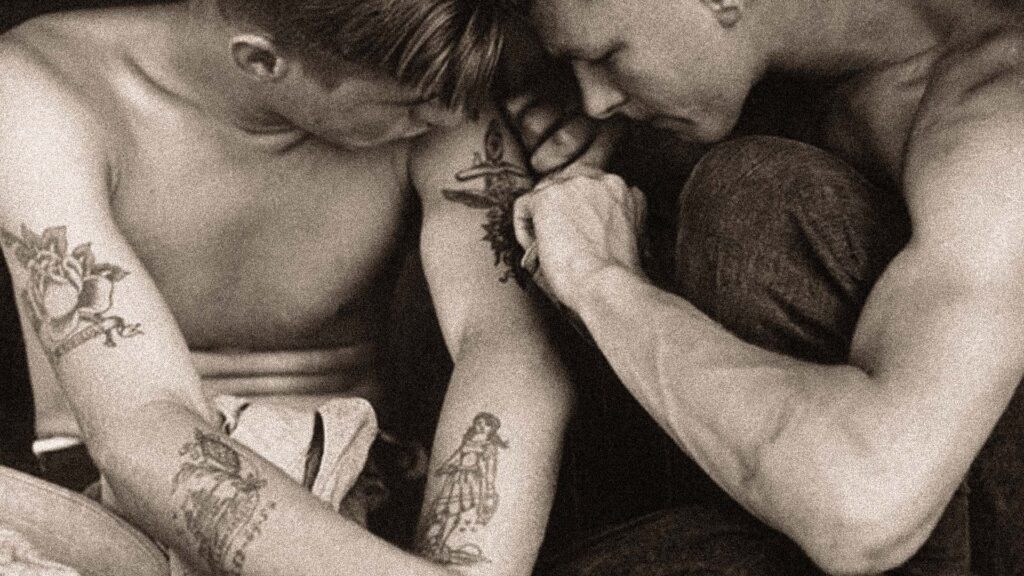
19世紀、荒波に挑むアメリカの水兵たちの間で発展したこのスタイルは、太い輪郭線と原色が特徴です。モチーフは単なる装飾ではなく、愛する人への想いや「無事に帰還する」ための切実なお守りとして刻まれました。
実は日本の「和彫り」とも深い縁があります。明治時代、横浜などの港を訪れた外国の水兵たちは、日本の卓越した彫り技術に魅了され、その構図や色彩感覚を自国へ持ち帰りました。
「過酷な運命に立ち向かう決意を肌に刻む」という精神性は、太平洋を挟んだ日米で共通しており、この出会いが現代のグローバルなタトゥー文化の礎となっています。
Developed among American sailors braving the rough seas in the 19th century, this style is characterized by thick outlines and primary colors. The motifs were not mere decorations; they were engraved as heartfelt talismans for thoughts of loved ones and to “return home safely.”
In fact, it also has a deep connection with Japanese “Wabori.” During the Meiji era, foreign sailors who visited ports such as Yokohama were fascinated by Japan’s outstanding tattooing techniques and brought those compositions and color sensibilities back to their own countries.
The spirituality of “engraving the determination to face a harsh destiny into the skin” is common to both Japan and the United States across the Pacific, and this encounter has become the foundation of modern global tattoo culture.
トライバル
Tribal
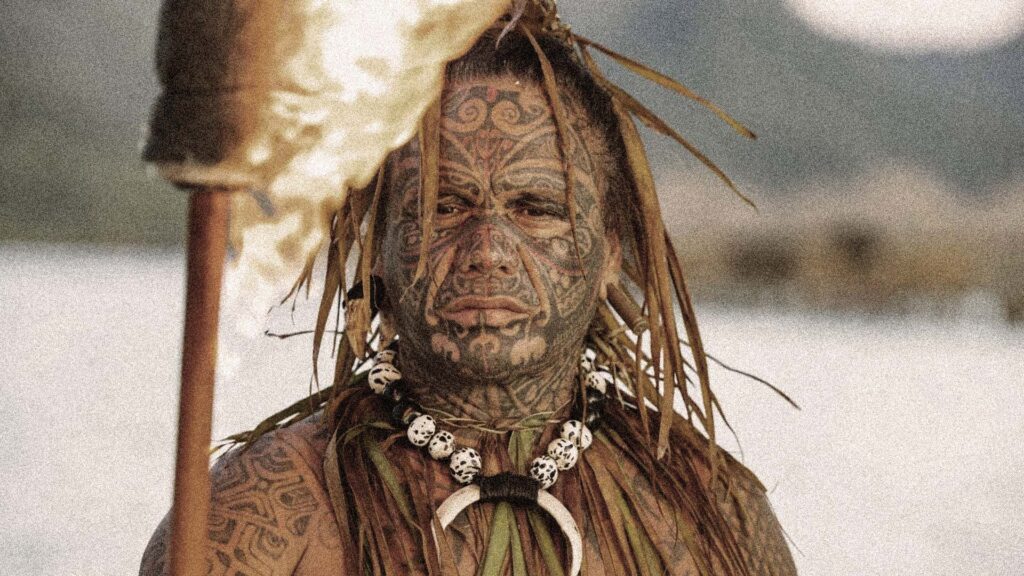
サモアやマオリなど、世界各地の先住民族に伝わるスタイルであり、タトゥーの語源を生んだ最古の歴史を持っています。 黒一色で描かれる力強い幾何学模様は、単なる装飾ではなく、部族内での「社会的地位」や「勇気の証」、さらには魔除けとしての信仰を宿した神聖な紋章として刻まれました。
日本の「縄文・弥生時代」の刺青と共鳴する美学があります。「身体を自然や精霊と繋げ、己のアイデンティティを証明する」という原始的な祈りの精神は、時代や国境を越えて共通する人類の本能的な表現と言えます。
ルーツや生命力を肉体に宿すダイナミックな美しさは、「自分自身の芯の強さ」を象徴するスタイルとして、世界中で愛され続けています。
A style passed down through indigenous peoples worldwide, such as the Samoans and the Maori, it holds the most ancient history and is the origin of the word “tattoo.” The powerful geometric patterns drawn in solid black were not mere decorations; they were engraved as sacred emblems embodying “social status” and “proof of bravery” within the tribe, as well as spiritual beliefs in protection against evil.
This aesthetic resonates with the tattoos of Japan’s Jomon and Yayoi periods. The primitive spiritual practice of “connecting the body with nature and spirits to prove one’s identity” can be described as an instinctive human expression shared across eras and borders.
The dynamic beauty of housing one’s roots and life force within the physical body continues to be loved worldwide as a style that symbolizes the “strength of one’s inner core.”
チカーノ
Chicano
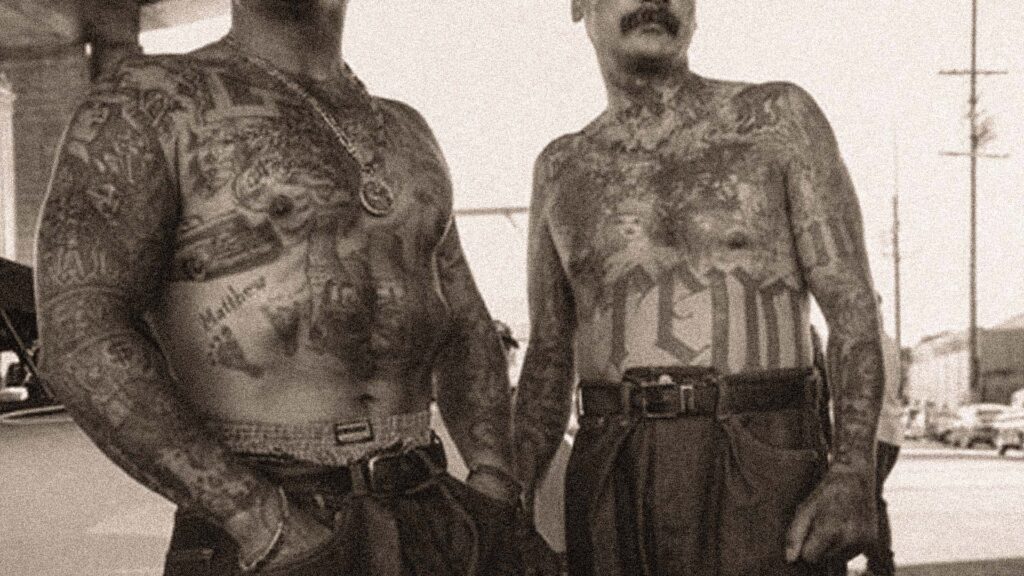
アメリカ在住のメキシコ系移民(チカーノ)文化から生まれたこのスタイルは、黒とグレーの繊細なぼかしで描くリアルな質感が特徴です。キリストや聖母マリア、亡き家族を想うスカルなどのモチーフは、単なるデザインではなく、過酷な環境下で「家族、信仰、そして自分のルーツ」を命がけで守り抜く誇りとして刻まれました。
日本の「和彫り」とも通ずる精神性があります。アウトローな世界の中でが抑圧の中で「粋」や「反骨」を表現したように、チカーノもまた、社会的な逆境の中で「決して折れない自分たちの絆」を肌に刻み続けました。
「大切な存在への愛と、自らのアイデンティティを一生背負う」という深い情熱は、国境を越えて日本のタトゥーシーンにも大きな影響を与え、現代の表現方法の一つとして定着しています。
Born from the culture of Mexican immigrants living in the United States (Chicanos), this style is characterized by a realistic texture drawn with delicate black and gray shading. Motifs such as Christ, the Virgin Mary, and skulls in memory of deceased family members are not mere designs, but were engraved as pride in protecting “family, faith, and one’s roots” with one’s life under harsh circumstances.
There is a spirituality that also resonates with Japanese “Wabori.” Just as “Iki” and “rebellion” were expressed amidst oppression within the outlaw world, Chicanos also continued to engrave “our bonds that will never break” into their skin amidst social adversity.
The deep passion of “carrying the love for precious beings and one’s own identity for a lifetime” has crossed borders and significantly influenced the Japanese tattoo scene, becoming established as one of the modern methods of expression.
自己表現を尊重するタトゥーのかたち
Tattoos as a Form of Self-Expression
タトゥーは、古くは「祈り」や「魔除け」として始まり、江戸の「粋」や世界各地における「守護」の象徴として、時代や文化とともにその意味を変えながら受け継がれてきました。 現代では、こうした伝統的な精神性に加え、「ヴィーガンインク」などの新しい技術も取り入れられ、より安心して楽しめる自由な自己表現へと進化しています。
また、タトゥーは自己表現であると同時に、アーティストの作品をコレクションするという側面も持っています。それぞれのアーティストが持つ独自の世界観や表現を身に刻むことで、唯一無二の価値を持つ特別な存在となります。さらに、人生の節目や大切な出来事、経験や記憶を身体に刻み、物語として残していくという意味も持っています。
歴史が紡いできた豊かな物語の中から、あなた自身のアイデンティティを彩るとともに、アーティストの作品として、そして人生の記録として長く寄り添う「一生モノのパートナー」となるデザインを見つけていただければ幸いです。
Tattoos began in ancient times as “prayer” and “protection against evil,” and have been passed down through generations—evolving in meaning alongside eras and cultures—as symbols of “Iki” (chic style) in Edo and “guardianship” throughout the world. In the modern day, in addition to this traditional spirituality, new technologies such as “vegan ink” have been incorporated, evolving into a free form of self-expression that can be enjoyed with greater peace of mind.
Furthermore, while a tattoo is a form of self-expression, it also has the aspect of collecting an artist’s work. By engraving an artist’s unique worldview and expression into one’s body, it becomes a special existence with one-of-a-kind value. In addition, it carries the meaning of engraving life’s milestones, important events, experiences, and memories onto the body, leaving them behind as a narrative.
From among the rich stories woven by history, we hope you will find a design that colors your own identity and becomes a “lifelong partner” that stays with you for a long time—as an artist’s work and as a record of your life.
※掲載の画像および情報は、各公式ウェブサイトや関連メディアの記事などを参考に整理・編集のうえ掲載しており、権利はそれぞれの所有者に帰属し、各公式ウェブサイトおよび関連メディアを出典としています。 ※The images and information published on this site have been organized and edited based on official websites and related media articles. All rights belong to their respective owners, and the sources are credited to official websites and related media.
THE GOOD CAT SCRATCH
Lifestyle, Art & Tattoo
安心してお越しいただき、心地よい時間を過ごしていただける空間づくりを目指しております。
全てのお客様に特別な時間をお楽しみいただくために、謙虚でありながらも、感性に響く美しさをお届けできればと思っております。
We strive to create a space where our client can feel at ease and enjoy a truly comfortable experience.
With humility and care, our hope is to offer a sense of beauty that resonates with the senses, so that each and every client may enjoy a truly special moment.

住所:〒153-0051 東京都目黒区上目黒2-47-5 Xspace中目黒 1階
アクセス:東京メトロ日比谷線・東急東横線 中目黒駅南改札 西出口より徒歩約6分
Address : 2-47-5 Kamimeguro, Meguro-ku, Tokyo 153-0051, Japan
Access : Approximately a 6-minute walk from the South Gate / West Exit of Nakameguro Station (Tokyo Metro Hibiya Line / Tokyu Toyoko Line)
ご意見、ご質問などございましたら、お気軽にインスタグラムページのDMにて、ご連絡お待ちしております。
If you have any questions or comments, feel free to send us a direct message on our Instagram page. We look forward to hearing from you.
#TokyoTattooStudio #FineLineTattoo #東京タトゥー
